If you sell products online or ship goods to customers, the right packaging can make a big difference. A well-designed shipping box can protect products during transportation while also creating a professional brand experience.
But how to make Custom Shipping Boxes that fit your products, withstand shipping, and meet your packaging requirements?
The process starts with the product itself. You need to consider the product dimensions, box material, thickness, structure, printing, and shipping conditions before moving into production. Working directly with a Custom Shipping Boxes manufacturer can also make it easier to customize the box size, thickness, style, and appearance according to your products.
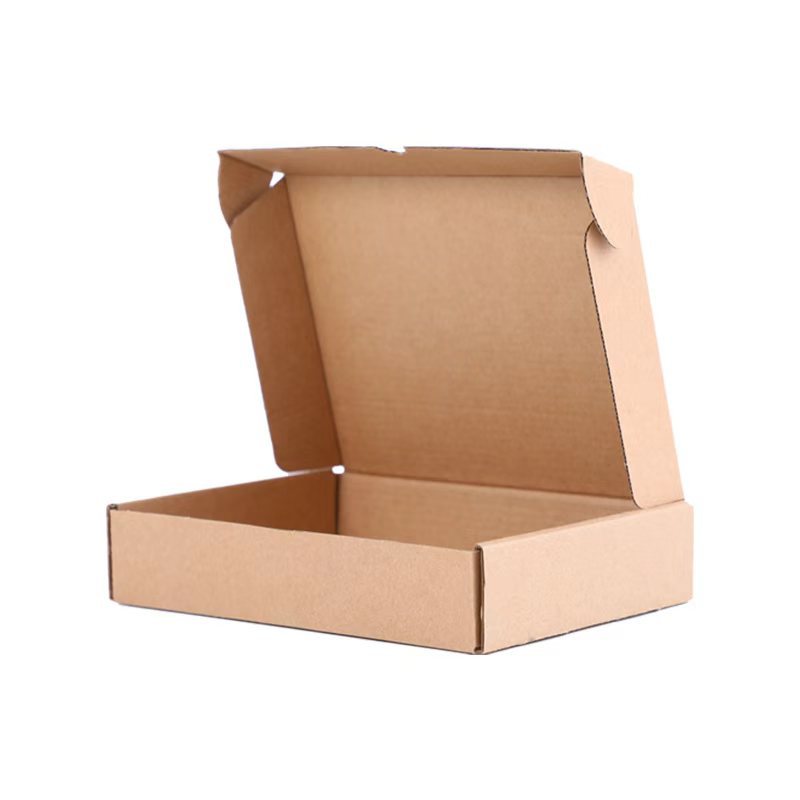
Custom shipping boxes are boxes manufactured according to the specific requirements of a product, brand, or shipping application.
Unlike standard stock boxes, custom boxes can be produced with different:
Length and width
Height
Board thickness
Box styles
Structural designs
Printing
Colors
Logos
Surface finishes
For example, a small electronic product may require a compact box with protective inserts, while larger or heavier products may need thicker corrugated material and stronger construction.
The goal is to create packaging that fits the product rather than forcing the product to fit a standard box.
How to Make Custom Shipping Boxes?
The production of custom shipping boxes usually involves several important steps.
1. Measure the Product
The first step is to determine the size of the product.
Measure the:
The box should provide enough internal space for the product and any protective materials, but it should not be unnecessarily oversized.
For fragile products, additional space may be required for foam, paper, cardboard inserts, or other cushioning materials.
Accurate measurements help reduce wasted packaging material and can also help control shipping costs.
2. Choose the Right Material
Material selection is an important part of making custom cardboard shipping boxes.
Corrugated cardboard is widely used for shipping because it provides a good balance of strength, weight, and cost.
Different board structures and thicknesses can be selected according to the application.
For example, customers may require:
Lightweight cardboard for small products
Thicker corrugated board for heavier products
Stronger board structures for long-distance transportation
Different flute configurations for different strength requirements
A professional manufacturer can recommend a suitable material based on the product weight, shipping method, stacking requirements, and protection needs.
3. Choose the Box Thickness
Box thickness should match the product and transportation conditions.
A thin box may be suitable for lightweight products, while heavier or fragile products may require a thicker and stronger structure.
As a custom shipping boxes supplier, we can customize the thickness according to the customer's requirements rather than offering only fixed standard specifications.
This allows the packaging to be designed around the actual product and shipping environment.
4. Choose the Box Style
There are many types of shipping boxes available, and the best style depends on how the box will be used.
Common options include:
The structure can be customized to make the box easier to assemble, close, stack, store, and transport.
For e-commerce products, for example, a self-locking or mailer-style box may provide a convenient unboxing experience. For industrial products, a stronger corrugated shipping carton may be more appropriate.
5. Design the Box Size
One of the biggest advantages of custom packaging boxes is that the dimensions do not have to follow standard stock sizes.
The manufacturer can produce the box according to the required dimensions.
Customers can specify:
Length × Width × Height
For example, if a product requires an internal box size of 300 × 200 × 100 mm, the box structure can be designed around these dimensions.
Custom sizing can help:
Improve product protection
Reduce unnecessary empty space
Reduce packaging material waste
Improve warehouse efficiency
Optimize shipping costs
Create a better presentation
6. Customize the Box Style and Structure
When making custom shipping boxes, the box structure can be adjusted according to the product and application.
Structural customization may include:
Lid design
Flap structure
Folding method
Locking mechanism
Handle holes
Inserts
Compartments
Product supports
Die-cut openings
This is particularly useful when standard packaging cannot properly protect the product or provide the required presentation.
7. Add Custom Printing
Custom shipping boxes can also be used as part of a company's branding.
Depending on the printing requirements, the box can include:
Company logo
Brand name
Product information
Product illustrations
Instructions
Barcodes
Shipping information
Handling symbols
Custom printed shipping boxes can turn ordinary transportation packaging into a brand communication tool.
For businesses that sell directly to consumers, printed packaging can also improve the unboxing experience.
8. Make a Prototype
Before starting mass production, it is recommended to make a sample or prototype.
A prototype allows customers to check:
Box dimensions
Product fit
Folding structure
Thickness
Printing
Closure method
Product protection
If adjustments are required, the dimensions or structure can be modified before mass production.
This step is particularly important for custom box packaging, because every product may have different packaging requirements.
9. Test the Custom Shipping Box
A shipping box needs to do more than look good. It also needs to protect the product during transportation.
Depending on the application, testing may consider:
Compression
Stacking
Impact
Vibration
Drop resistance
Moisture exposure
The required testing level depends on the product, transportation distance, shipping method, and packaging structure.
For fragile or high-value products, additional internal protection may be needed.
10. Mass Production
Once the box dimensions, material, thickness, structure, and printing have been confirmed, the manufacturer can begin mass production.
A direct factory can coordinate the complete process, from material selection and structural design to printing, die cutting, folding, and final packaging.
This can make custom production more efficient for businesses that need boxes in larger quantities.
Why Choose Custom Shipping Boxes?
Standard boxes are convenient, but they may not always be the most efficient choice.
Custom shipping boxes provide several advantages.
Better Product Fit
A custom-sized box can be designed around the actual product dimensions.
Better Protection
The box structure and thickness can be selected according to the product weight and shipping conditions.
More Efficient Shipping
Reducing unnecessary empty space can help optimize package dimensions and potentially reduce transportation costs.
Better Branding
Custom printing allows businesses to display their logo, colors, product information, and brand identity.
Flexible Customization
Different products can use different sizes, thicknesses, structures, and styles.
Custom Cardboard Shipping Boxes for Different Products
Custom cardboard shipping boxes can be used for a wide range of products and industries.
Common applications include:
E-commerce products
Electronics
Household products
Clothing and accessories
Cosmetics
Food packaging
Gifts
Industrial components
Hardware
Promotional products
The packaging requirements can vary significantly between these applications, which is why custom dimensions and material specifications are important.
Why Work With a Custom Shipping Boxes Manufacturer?
Choosing a direct custom shipping boxes manufacturer can provide more flexibility than purchasing standard boxes from a reseller.
A source factory can customize:
Box length
Box width
Box height
Material
Thickness
Box structure
Style
Printing
Logo
Inserts
Packaging details
Customers can communicate their product dimensions and packaging requirements directly with the manufacturer, making it easier to develop a suitable packaging solution.
For large-volume orders, working directly with a factory can also provide better control over production consistency and customization.
Custom Shipping Boxes Supplier for OEM Packaging
A reliable custom shipping boxes supplier should be able to support more than simple size customization.
For OEM packaging projects, the supplier should understand how the box will be used and recommend suitable materials and structures based on the product.
The typical process is:
Product Information → Size Confirmation → Material Selection → Box Design → Sample → Testing → Mass Production
This process allows the packaging to be developed according to the customer's actual requirements.
FAQ About Custom Shipping Boxes
Can I customize the size of shipping boxes?
Yes. Custom shipping boxes can be manufactured according to the required length, width, and height.
Can I customize the thickness of a shipping box?
Yes. The board thickness and material structure can be selected according to the product weight, protection requirements, and shipping conditions.
Can I customize the style of the shipping box?
Yes. Different box structures, folding methods, flap designs, locking systems, inserts, and other features can be customized.
Can custom shipping boxes have a logo?
Yes. Custom printed shipping boxes can include logos, brand names, product information, graphics, barcodes, and other printing elements.
What information should I provide to a custom shipping box manufacturer?
It is helpful to provide the product dimensions, product weight, desired box size, shipping method, required thickness, box style, printing requirements, and expected order quantity.
Can I get a sample before mass production?
Yes. A sample or prototype can be produced so that the dimensions, structure, material, and printing can be checked before mass production.
So, how to make custom shipping boxes? The process starts by understanding the product and then selecting the appropriate material, dimensions, thickness, structure, printing, and protection requirements.
The major advantage of custom packaging is flexibility. Instead of choosing from a limited range of standard boxes, businesses can create packaging specifically for their products.
As a direct custom shipping boxes manufacturer and supplier, we can customize the size, dimensions, thickness, structure, and style of shipping boxes according to different product and transportation requirements. From prototype development to mass production, custom packaging can be designed to provide the right balance of protection, appearance, and shipping efficiency.



 English